An online course for couples
Stop fighting each other about your families.
Short video lessons for visits, unsolicited advice and the holidays. Agree on your approach together, then each talk to your own family as “we.”
For married and long-term couples. Take it together, or start alone.
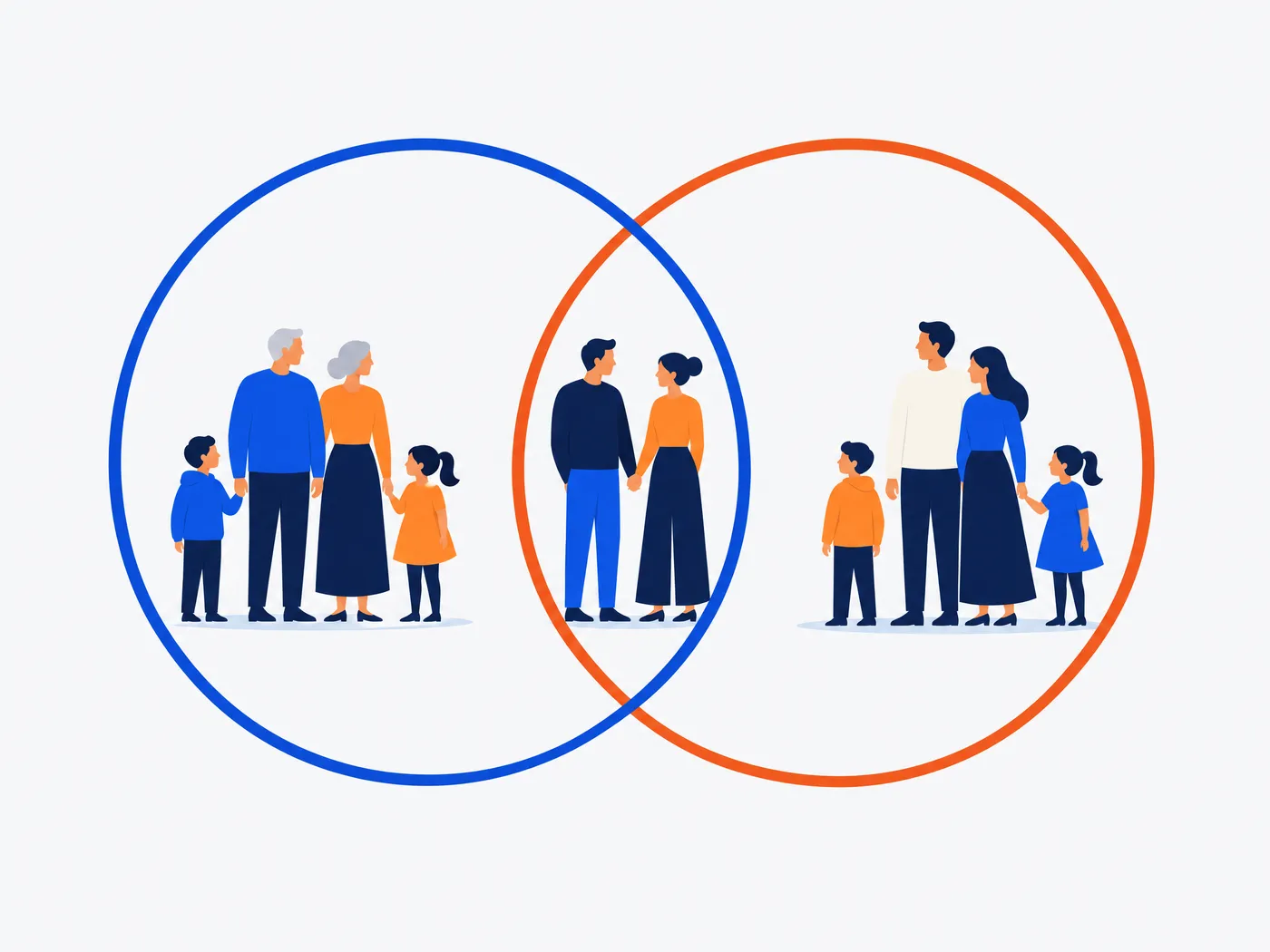
The real fight isn’t with your in-laws. It’s between the two of you.
- 1 in 3
couples have serious in-law conflict, one couples therapist estimates, and it often grows after kids.1
- 20%
26 years, 373 couples: how each partner handled the in-laws predicted divorce risk, with up to a 20% swing.2
- 43%
of parents have disagreed with their kids’ grandparent about how to raise them.3
Try it: the alignment check
Where do you two actually disagree?
Answer for yourself, then guess your partner’s, or hand them the phone. The gaps are where the fights start.
Visits to either family’s home should be…
Partner 1Partner 2When a parent gives advice we didn’t ask for, we…
Partner 1Partner 2The holidays should be…
Partner 1Partner 2Who talks to each set of parents about a problem?
Partner 1Partner 2
Answer for both of you to see your gaps.
Close the gaps together in the course. Join the waitlist to hear when it opens.
How it works
- 1
Map your gaps
Each of you answers privately about visits, advice, holidays and money. You see where you differ, without blame.
- 2
Agree on a plan
Short guided conversations turn each gap into a shared position you both can live with, before the next visit.
- 3
Say it as “we”
Each of you talks to your own parents, with scripts that sound like you. No one gets cast as the villain.
Six modules
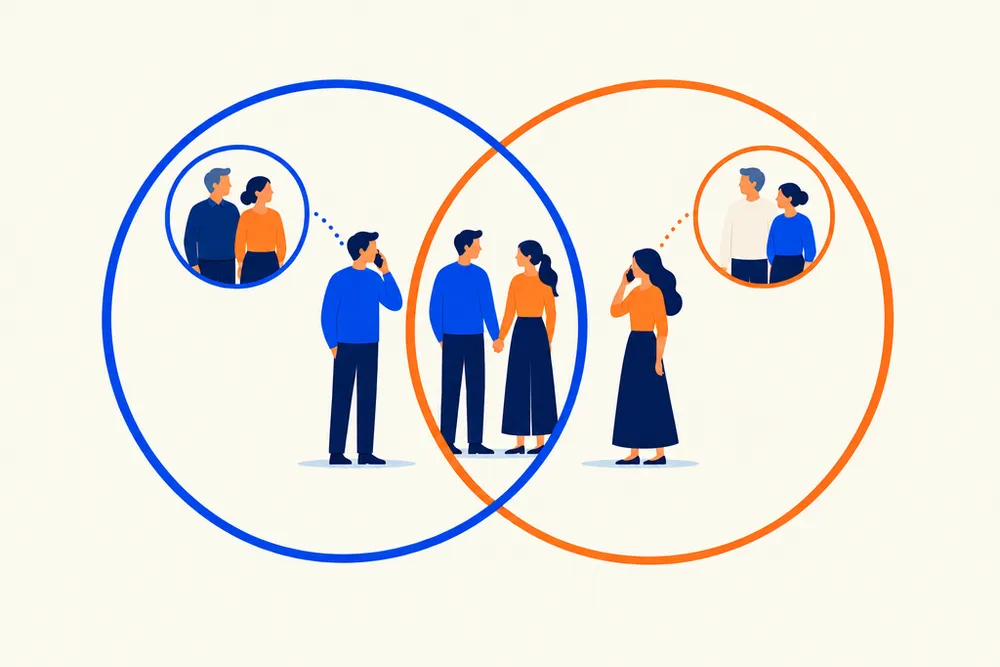
Short video lessons with scripts and worksheets. Built on what couples therapists use: Gottman’s research on accepting each other’s influence, staying close to your family without letting them make your decisions as a couple, and the rule that each partner handles their own parents.
- 01Why in-law fights become couple fights
- 02Visits, drop-ins and how long is too long
- 03Unsolicited advice, including about the kids
- 04Holidays and the big events
- 05Money, gifts and help that comes with strings attached
- 06Repair when it goes wrong anyway
Questions
My partner won’t take a course.
Start alone. The first module is written for one partner, and ends with a ten-minute conversation that invites the other in.
Will this turn us against our families?
The opposite. Clear, shared limits are what let both families stay close without wearing you down.
We’re not married. Is it for us?
Yes. It’s for any long-term couple with two families to deal with, married or not.
When does it open, and what does it cost?
Soon. Join the waitlist and we’ll email you when it opens, with an early-bird price. One purchase covers both of you.
Is this therapy?
No. It is a practical course. If there is abuse or you feel unsafe, a licensed therapist is the right first step.
One team. Both families.
One purchase covers both of you: six modules of short video lessons, scripts and worksheets. Couples therapy typically runs $175–350 a session in the U.S.4